The History of Collectible Clothing: Aristocratic Dress to Contemporary Wearable Art
Clothes remember. Long before it hung in a museum vitrine or crossed an auction block, a garment was simply a second skin, stitched to shield the body from weather, to announce a trade, a faith, a place in the world. And yet even then, thread carried more than warmth. It carried intention.
The passage from garment to relic was never a single gesture; it was a slow accumulation, like patina on silver. A robe outlived the body that wore it because someone recognized, in its weight and workmanship, something worth keeping. Royal wardrobes and ceremonial dress were the first proof that fabric could hold memory the way a diary holds a voice.
By the nineteenth century, the emergence of haute couture in Paris transformed this quiet instinct into a structured institution.
A dressmaker could become an author; a gown could bear a name the way a canvas bears a signature. What follows is the story of how a piece of cloth learned to outlive its century and why, today, a coat can be read the way one reads a poem.
17th–18th Century
Clothing as Aristocratic Identity
At Versailles, silhouette was sentence structure. Similar court traditions shaped aristocratic dress across England, Austria, and Spain, where clothing served as an unmistakable marker of rank and privilege.
A bodice cinched just so, a length of Lyonnais silk, a flourish of gold thread: these were not ornaments but grammar, spelling out exactly where one stood in a rigid hierarchy of birth.
Sumptuary laws across Europe made this grammar official, legally reserving certain velvets, laces, and hues for the nobility alone; wealth without rank still could not buy the right fabric.
Behind the era’s most famous wardrobe stood not a queen but a shopkeeper’s daughter. Marie-Jeanne, known as Rose Bertin, the modest-born milliner, was received twice weekly in private by Marie Antoinette, and together they reinvented French style so thoroughly that the press half mockingly called Bertin the kingdom’s “Minister of Fashion.”
Bertin’s designs traveled the courts of Europe on miniature dolls, sent as diplomatic gifts of taste long before photographs or runways existed.
This reminds us that clothing was never mere decoration. It was a biography, worn.
19th Century

Source: Musée National des Châteaux de Versailles et de Trianon / Collection of Versailles, Portraits and Royal Costume Archives.
The Birth of Haute Couture
If Bertin gave fashion its first celebrity, Charles Frederick Worth gave it its first signature. An Englishman who had spent years studying the drape of painted velvet in royal portraits, Charles Frederick Worth founded the House of Worth at 7 Rue de la Paix in 1858, establishing what is widely regarded as the first true haute couture house.
He did something no dressmaker before him had dared: he stopped waiting for instructions. He designed first and let his clients choose from his own imagination.
Worth sewed his name into the lining of every gown, a small act that changed fashion’s grammar forever, making authorship as visible as material.
His wife, Marie Vernet, wore his creations through the streets of Paris, becoming, in effect, history’s first professional model.
Worth treated a gown the way a painter treats a canvas, as an original, not a copy. That single idea, that a dress could have an author, became the seed from which the entire language of collectible fashion would grow.

Source: The Metropolitan Museum of Art — The Costume Institute Collection
Early–Mid 20th Century
Fashion Enters the Museum
Institutions such as the Victoria and Albert Museum in London and The Costume Institute at The Metropolitan Museum of Art began preserving garments by Dior, Chanel, Balenciaga, and other couturiers as cultural artifacts rather than seasonal fashion.
They were preserved not as last season’s silhouette but as a fossil of its moment, a way of reading, in seam and cut, how women moved, worked, and dreamed in a given decade.
A dress, once folded into acid-free tissue and laid in a museum drawer, stops being clothing and becomes evidence.
Late 20th Century
Fashion as Cultural and Symbolic Capital
By the century’s later decades, a label had become a kind of dialect, instantly legible, carrying with it a whole world of association before a single word was spoken. To wear a house’s name was to borrow its story, in the same quiet way a reader borrows a novelist’s voice simply by opening the cover.
Exhibitions, retrospectives, and the first serious fashion scholarship treated the wardrobe the way literature treats metaphor: never only what it says, but what it means.
A garment could now hold a decade’s politics, its shifting notion of the feminine, its restlessness or its reserve, the way a photograph holds light long after the moment has passed.
Curators and historians began to read a hemline the way art historians read a brushstroke, not as decoration, but as evidence of a hand, a period, a point of view.
Consumers, too, grew more literate in this language; buying a garment increasingly meant buying into a narrative, a lineage of taste that stretched back, however loosely, to the ateliers and salons of an earlier century.
Contemporary Era
The Rise of Collectible Fashion
Scarcity, once a matter of geography and guild secrecy, is now made deliberately: the one of one commission, the capsule that will never be repeated, the collaboration built to vanish after a single season.
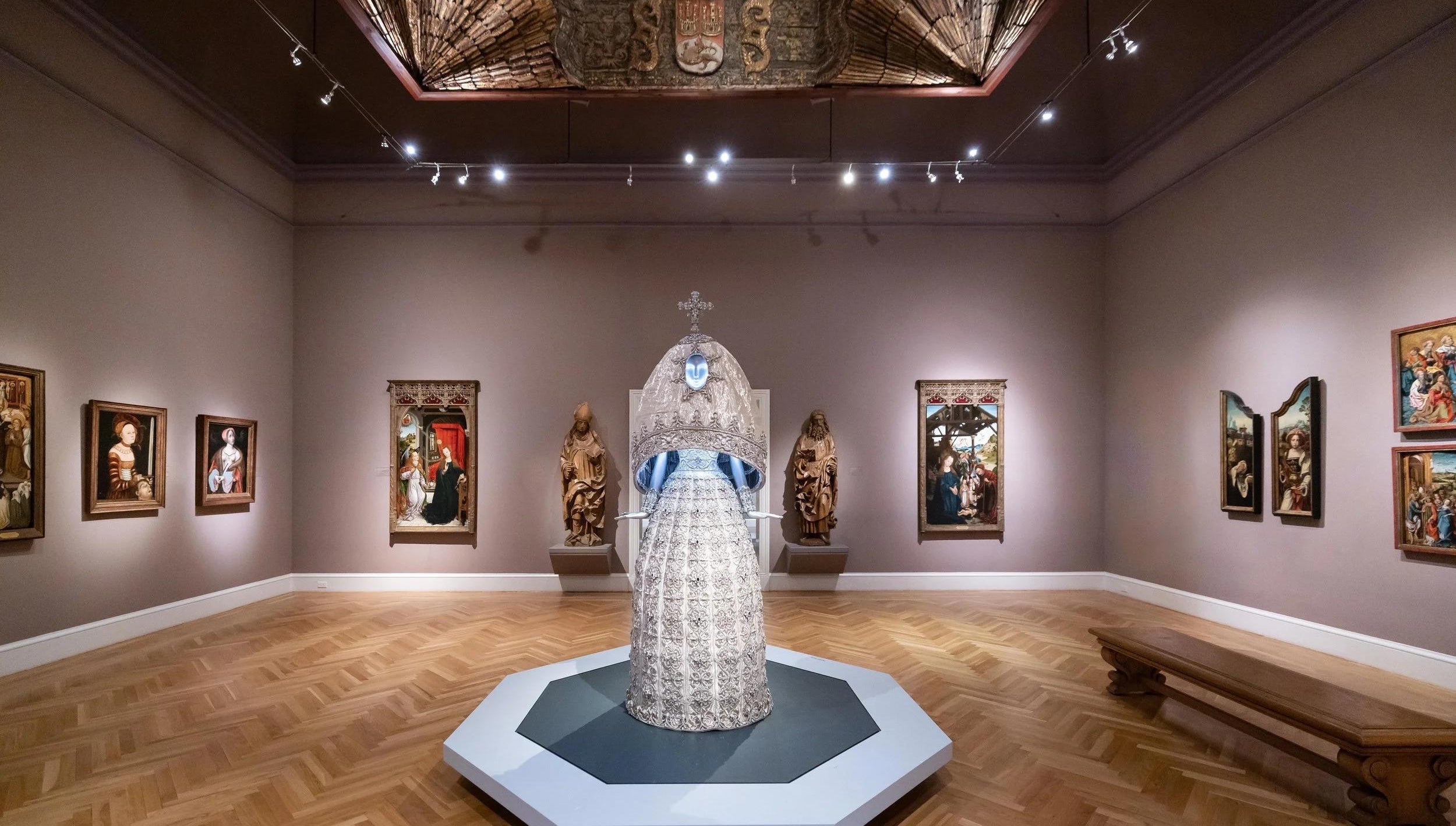
Museums stage couture retrospectives with the hush and choreography once reserved for old masters, inviting the public to read embroidery the way they might read brushwork, pausing over a single seam the way one might pause before a fold of paint on canvas.
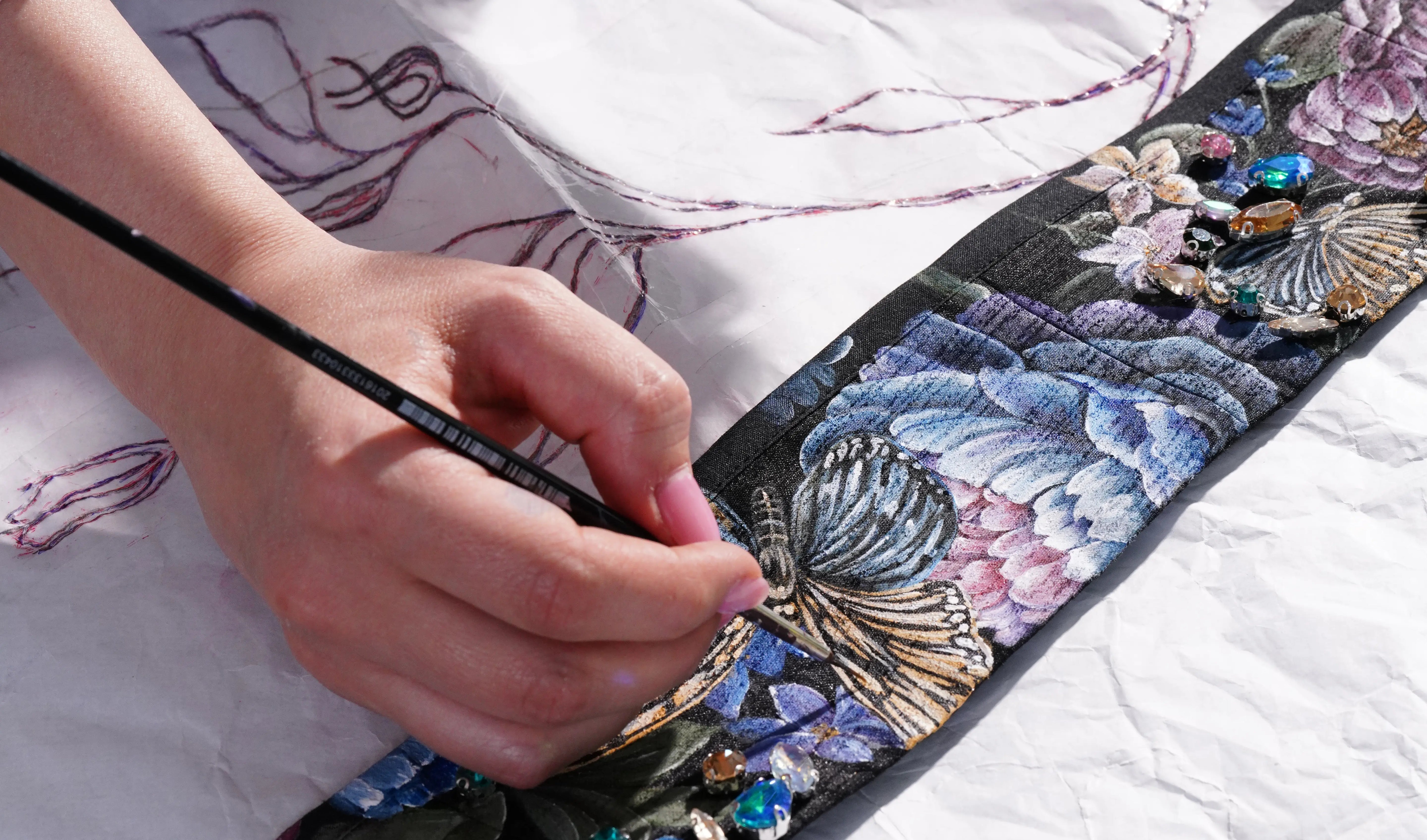
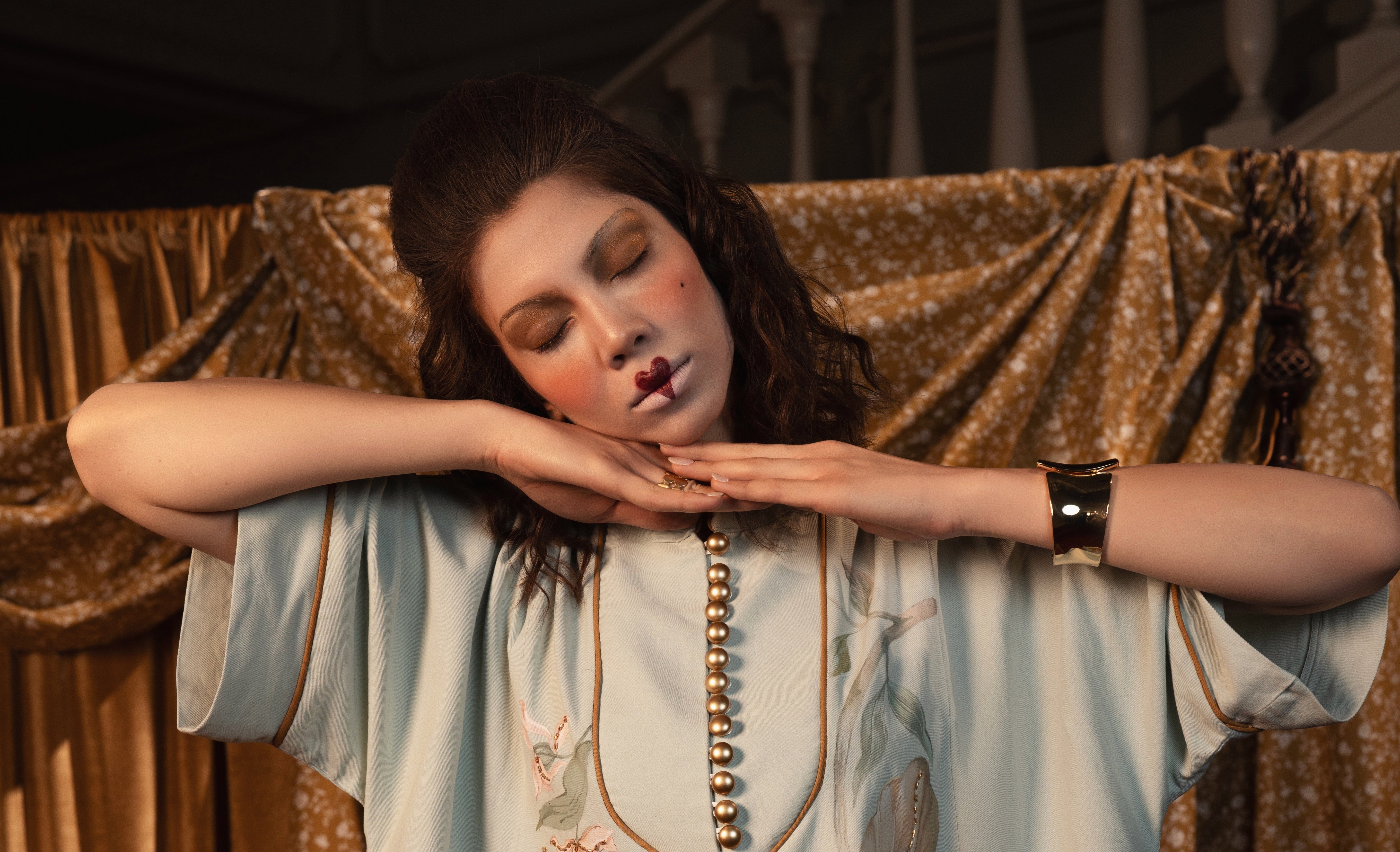
Wearable art extends this logic further still, the garment as canvas, its embroidery a form of drawing, its drape a form of sculpture, each piece singular by design rather than by accident of survival.
Here, the designer’s hand becomes as legible as a signature at the corner of a painting, and the boundary between the atelier and the gallery grows deliberately thin.
A coat, in this sense, is no longer merely tailored; it is composed, the way a piece of music is composed, with intention behind every measure.

Fashion Collecting Today
From Museums to Private Collectors
The private collector has, in recent years, quietly joined the museum curator at the table.
Auction houses long associated with Old Masters and vintage automobiles now hold sales devoted entirely to fashion, archival couture, rare accessories, one-off collaborations.
Record auction results have placed couture garments alongside paintings, rare watches, and collectible design as enduring assets.
Museums and private collections now work less as rivals than as two halves of the same custodianship. Institutions offer scholarship, context, and public access; private collectors often preserve the pieces too fragile, too personal, or too singular for a public archive to hold. Between them, a single dress can be, at once, a cultural document and a considered investment, proof that value in fashion, like value in art, rests on the twin pillars of story and scarcity.
Conclusion
The Future of Collectible Clothing
What began as a matter of survival, cloth against cold, has arrived, centuries later, as cloth as memory, as authorship, as art. Rarity, the hand of a maker, the story stitched into a hem: these remain the quiet arithmetic behind every garment that outlives its season.
The future of collectible fashion likely belongs less to volume than to intention, fewer pieces, each with something to say.
As wearable art continues to blur the boundary between fashion and fine art, the future of collectible clothing will likely be defined by originality, craftsmanship, and the singular vision of its creator.
It is in this spirit that a house like Rondooz finds its footing: not chasing the crowded room, but choosing, deliberately, to make less and mean more, honoring the same instinct that once turned a queen’s gown, or a couturier’s sketch, into something a museum, or a memory, would refuse to let go of.
From Versailles to the auction room, the thread has never really changed.
Clothing, at its best, was never just something to wear. It was always something to remember by.