Article: What is Wearable Art?
What is Wearable Art?
Stories of clothing have always been part of our narrative; a place where art and literature become deeply intertwined, elevating the world of textiles to a new level of meaning so that a garment woven from emotion, memory, and connection may find its place upon the body.
Through the language of wearable art fashion, we strive to allow different layers of artistic expression to flow into fabric, transforming textile surfaces into spaces of storytelling. By engaging the eye and inviting reflection, each creation seeks to communicate its own narrative and reveal a deeper relationship between art and the act of wearing.
What is Wearable Art?
The presence of art in the form of a garment is a living pulse that connects the canvas to the body. It creates a dialogue between artistic expression and human presence, allowing an artwork to move beyond observation and become part of lived experience. Every piece is shaped through a singular creative process; it is never repeated and comes into existence only once.
Each work is born from its own moment, carrying with it the marks of its creation and the individuality of the artist’s hand. It is this uniqueness that distinguishes wearable art clothing from mass production. Every piece possesses an independent identity and finds its meaning in being one of one, existing beyond replication and beyond uniformity.
A Short History of Wearable Art
Wearable Art broke down the boundaries between art and clothing. What began within galleries, exhibitions, and artistic spaces gradually found its way into the heart of everyday life. The foundations of this perspective emerged from movements that sought to separate art from the walls that confined it and bring it into daily experience. In this vision, an artwork is not merely viewed from a distance; it becomes something that can be lived with, carried, and experienced through movement and presence.
Wearable Art emerged at the intersection of visual arts, craftsmanship, and garment design. Although the concept has appeared in different forms throughout various periods, some scholars trace the origins of this movement to the years between the 1930s and the 1960s, while many believe that it gained a more defined identity in the late 1960s and reached the height of its influence during the 1970s.
The intellectual roots of Wearable Art can be found in the Arts and Crafts movement of the second half of the nineteenth century, which emphasized the connection between art and everyday life, as well as the value of handmade creation. During the 1970s, influenced by hippie culture, anti mass production ideals, feminist art, and the rise of Fiber Art, Wearable Art gained increasing recognition as a unique form of artistic expression. Many artists, particularly women, embraced this medium as a way to express both creativity and personal identity.
Within this evolving movement, concepts such as Art to Wear and Wearable Art emphasized the uniqueness of each piece, the importance of handcraftsmanship, and the direct presence of the artist throughout the creative process. In doing so, they transformed clothing from a functional object into a lived artistic experience.
Wearable Art vs. Traditional Fashion
For lovers of fashion and for those who regard creativity as an inseparable part of who they are, the spirit of these works may offer the possibility of a different world. It is a world shaped by imagination, individuality, and artistic expression; a world in which clothing becomes more than appearance and takes on a deeper cultural and emotional significance.
In contrast to traditional fashion, wearable art finds its vitality in meaning rather than speed. It exists in intention rather than urgency, and in permanence rather than constant replacement. It is a space where trends give way to purpose, and mass production yields to uniqueness. While conventional fashion often relies on repetition, seasonal cycles, and rapid change, wearable art is rooted in time, patience, craftsmanship, and the visible presence of the artist’s hand throughout the creative process.
Defining Qualities of wearable art
This is what makes wearable art distinctive. Here, clothing speaks of beauty, memory, and expression. It becomes a medium through which artistic ideas continue to live, while discovering their own rhythm within everyday life. Rather than following the pace of changing trends, it follows the pace of creation itself.
Wearable Art vs Fast-Print Merch
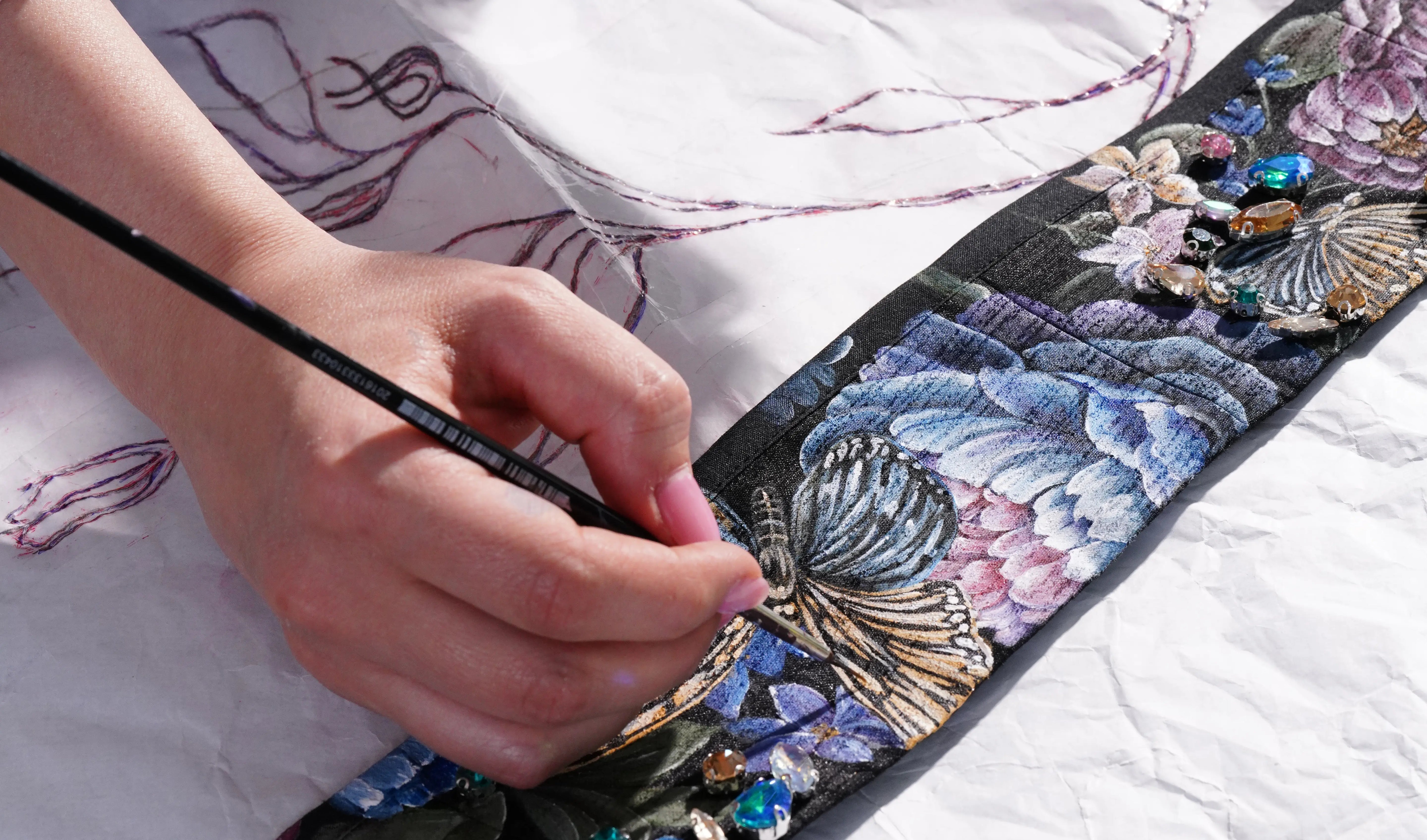
Against the backdrop of mechanical printing and accelerated production, what truly matters is the trace of the creator’s presence, details that cannot be replicated. The subtle irregularities, the gestures of the hand, and the evidence of artistic decision making become part of the work’s identity. Here, every line carries a human touch and every color bears the mark of intention. It is this difference that gives a work its soul, character, and individuality.
Materials, Techniques and Creativity
We begin with the canvas; with a painting that slowly takes shape through layers of thought, observation, and imagination. The creative process unfolds gradually, allowing each mark, texture, and color to emerge in its own time. From there, the artwork changes its path and moves toward fabric, transforming into a garment that becomes the continuation of the artwork’s life beyond the canvas. Rather than ending with the completion of a painting, the creative journey continues in another form.
Forms of Wearable Art
The forms of Wearable Art are not limited. From jackets and mantos to accessories and textile surfaces, each can become a second canvas for life. Each form offers a new possibility for artistic expression and a new relationship between the artwork and the individual who wears it. It is a place where the body welcomes the artwork and becomes part of its expression, allowing art to exist not only as an object but as an experience.
From Canvas to Couture: The Wearable Art Philosophy at Rondooz
At Rondooz, we do not simply create clothing; we create works intended to endure. Every piece is the continuation of an artistic process rather than the outcome of a manufacturing process. It is an extension of creation itself, carrying forward the values, emotions, and intentions that shaped its beginning.
In our atelier in Barcelona, where traditional Eastern artistic heritage is gently interwoven with the contemporary spirit of Europe, every work begins with silence, precision, patience, and the memory of the hand. The cultural depth embedded within artistic traditions remains present throughout the process, informing the work without overwhelming it.
The presence of historical and old cultures within the soul of each creation carries this cultural energy forward into the fabric, allowing it to continue its journey through form, texture, movement, and material.
By listening to the language of fabric, the act of creation begins, and through wearing it, its meaning becomes more complete. In this space, we do not exist between warp and weft as observers; we live within them. It is a place where memory remains embedded in textile structure and where movement shapes the continuation of the artwork. The fabric retains traces of creation while simultaneously becoming part of new experiences and new stories.
Whenever one of Rondooz’s creations is worn, its story does not come to an end; rather, it continues. The garment enters a personal narrative and becomes part of an individual journey. What began on the canvas finds a new life within the experiences, memories, movements, and presence of the person who wears it. In this way, every piece continues to evolve beyond its creation.
The role of the artist’s hand throughout this process is what separates the work from repetition. We speak of values, of color, form, time, and of a presence that remains within every creation. These are works that leave their mark upon a surface while finding a lasting place within the heart of life itself. They begin as artistic expressions, continue as garments, and remain as enduring stories carried through the lives of those who wear them.