The World’s Most Influential Fashion Magazines
Fashion has never really been about clothes alone. It has always been about who gets to define beauty, which designer gets discovered, and how a culture sees itself at a given moment. A single cover, with the right model and the right photographer, can shift the mood of an entire season more than any runway show.
Many titles compete for that kind of influence, but only a handful have truly earned it over the decades. Below are ten of them, magazines that did not simply report on fashion but actually helped shape it.
Vogue

Image Credit: Vogue Archives / Condé Nast
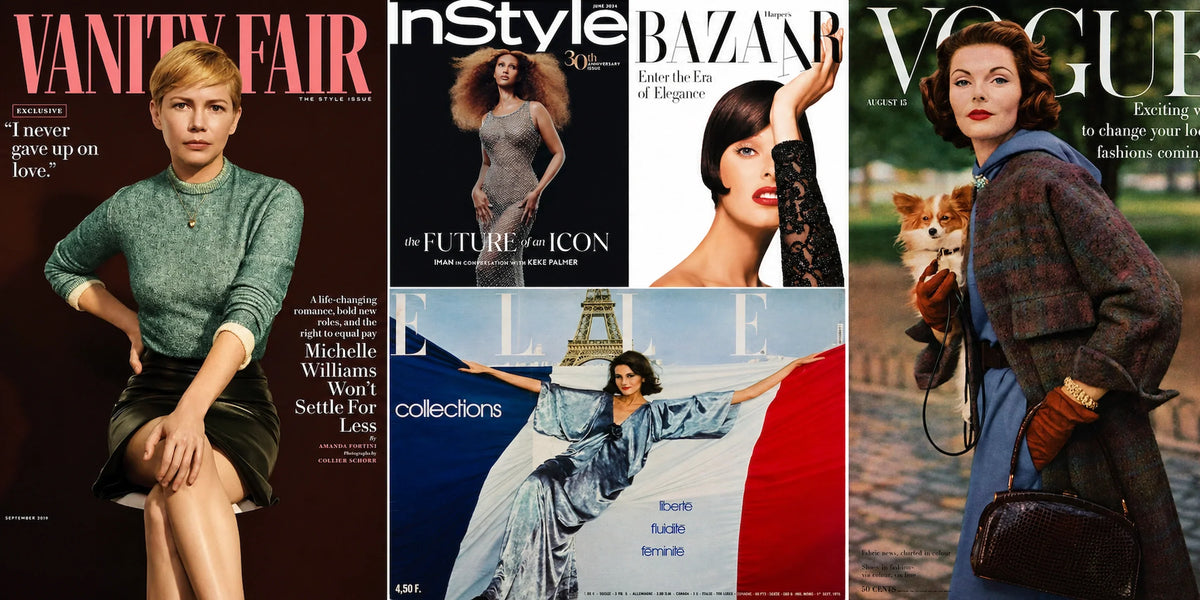
No fashion publication carries more weight than Vogue. It was founded in New York in 1892 by Arthur Baldwin Turnure as a weekly journal covering high society. In 1909, Condé Nast bought the magazine and turned it into the fashion authority it is today.
Anna Wintour ran the magazine for more than three decades starting in 1988, shifting its covers away from professional models toward Hollywood stars and turning the Met Gala into a global fashion spectacle. In 2025, Chloe Malle stepped in as head of editorial content, while Wintour moved into a broader, global role at Condé Nast.
With close to thirty international editions, Vogue remains the closest thing the industry has to a shared reference point, the magazine other magazines are measured against.
Vanity Fair

Image Credit: Vanity Fair Archives / Condé Nast
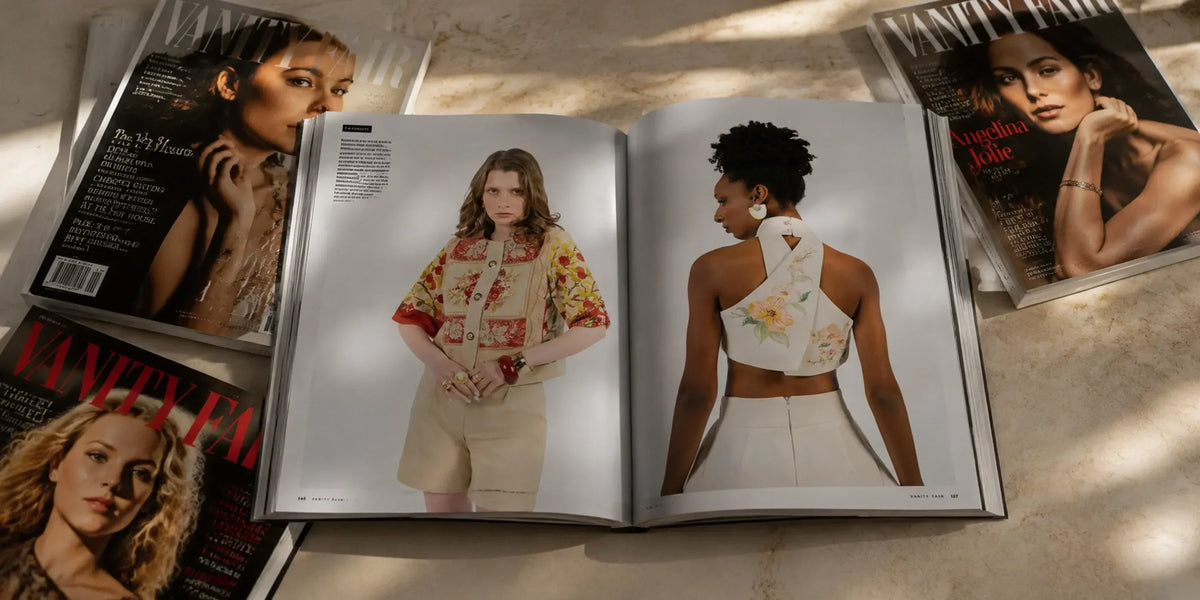
Vanity Fair has one of the stranger histories in publishing. It was launched by Condé Nast in 1913, folded into Vogue in 1936 during the Great Depression, and then revived from scratch in 1983.
That relaunch, led by editor Tina Brown, is what gave the magazine its modern identity, a mix of glamorous celebrity portraiture and serious political and cultural reporting.
That combination is exactly what sets Vanity Fair apart from purely fashion focused titles. Its annual Hollywood issue and its Oscar night party have become something close to institutions, and writers such as Dorothy Parker and Christopher Hitchens have passed through its pages over the years. Vanity Fair was never really about what people wear, it was about who holds power and how they use it.
Harper’s Bazaar

Image Credit: Harper’s Bazaar Archives / Hearst
Harper’s Bazaar has the strongest claim to being the oldest fashion magazine still in print. It dates back to November 1867, when the Harper family launched it in New York, and it has been under Hearst ownership since 1913.
Over the years, the magazine built its reputation as much through photography as through writing, working with names like Richard Avedon and Man Ray to turn fashion spreads into something closer to art.
It was also ahead of its time in other ways, writing about women’s suffrage and featuring Ady Fidelin, a Black model, in 1937, decades before most of its competitors did the same.
Elle

Image Credit: ELLE Archives / Lagardère News
Elle began in Paris in 1945, distributed at first as a supplement to a French newspaper before growing into a standalone magazine.
What sets Elle apart is its sheer reach. It now publishes dozens of local editions across continents, each one adapting global fashion coverage to a local readership rather than simply translating a single American product.
That balance between a consistent visual identity and genuine regional flexibility explains why Elle has stayed relevant across very different markets for eight decades.
Marie Claire

Image Credit: Marie Claire Archives
Also founded in France, in 1937, Marie Claire is often credited as the first fashion magazine that treated its readers as more than consumers of clothing.
From the beginning, it combined fashion coverage with reporting on women’s health, careers, and social issues, a formula that felt unusual at the time and has since become standard across the industry.
After a wartime pause, it relaunched in 1954 and now publishes in more than thirty countries, still built around the same idea, that fashion is part of a fuller life, not the whole of it.
Cosmopolitan

Image Credit: Cosmopolitan Archives / Hearst
Cosmopolitan started in New York in 1886 as a general interest family magazine, which makes its current identity something of a surprise.
Over the course of the twentieth century, it completely reinvented itself, becoming the go-to title for a younger, more candid readership interested in relationships, careers, and self-image alongside fashion trends.
Its blunt, conversational tone, very different from the more formal register of Vogue or Harper’s Bazaar, is exactly what has kept Cosmo relevant across generations of very different readers.
GQ

Image Credit: GQ Archives / Condé Nast
GQ occupies a category mostly of its own, serious menswear coverage at a scale nothing else really matches.
It grew out of a trade supplement called Apparel Arts before becoming its own consumer magazine in 1957.
GQ treats fashion as inseparable from music, film, sports, and politics, and that is part of why its interviews draw attention far beyond the fashion world. A GQ profile of an athlete or a musician often generates as much conversation as its style spreads.
In many ways, the magazine wrote the modern definition of what it means for a man to be well dressed.
W Magazine

Image Credit: W Magazine Archives
Launched in 1972, W built its reputation on being the least conventional major fashion title, closer to an art magazine that happens to feature clothes.
Its covers are known for taking risks that other publications avoid, surreal concepts, unexpected pairings, and photography that prioritizes a strong idea over a clean commercial shot.
That willingness to be strange has made W a favorite among designers and photographers looking for a platform that is not chasing mass appeal.
Glamour

Glamour launched in the United States in 1939, originally under the name Glamour of Hollywood, before repositioning itself in the 1940s around a very different reader, the working woman rather than the movie star. That shift shaped the magazine’s tone for decades to come.
Compared with more aspirational titles, Glamour has always leaned toward practicality, fashion advice that assumes a real budget and a real schedule, alongside coverage of mental health and personal growth that many other magazines were slower to take seriously.
InStyle

The youngest name on this list, InStyle launched in 1994 with a specific angle, showing readers how to actually recreate celebrity style rather than simply admire it from a distance.
Instead of centering runway shows, it built its identity around red carpet looks and practical styling advice, positioning itself as a bridge between high fashion and what someone could realistically wear. That accessibility-first approach was ahead of its time and later became the default model for a lot of fashion media.
The Bigger Picture
Line these ten magazines up and a pattern emerges: none of them succeeded by copying what everyone else was doing.
Vogue built its authority through consistency and scale. Vanity Fair leaned into celebrity and politics rather than pure style. Marie Claire and Glamour treated their readers as whole people, not just shoppers. GQ built an entire category around menswear when almost nobody else bothered.
Maybe that’s the real lesson here. In fashion publishing, longevity comes from having a clear point of view, not from copying whichever title happens to be on top in a given year.
These magazines survived economic crashes, the rise of the internet, and the shift to social media precisely because each one still stands for something specific. Scroll through a fashion feed today and it is easy to forget that most of what shows up there—the language, the imagery, even the idea of a cover moment—was invented in the pages of magazines like these, long before anyone had a phone in their pocket.