How Vanity Fair Shapes the Narrative of Luxury Fashion?
Luxury fashion has never been solely about garments. Behind every collection lies a history of artistry, an inheritance of craftsmanship, and a cultural weight that transforms fabric into meaning. A couture gown is not simply cut and stitched; it is imagined, debated, photographed, and eventually absorbed into the collective memory of an era. What separates a fleeting trend from an enduring icon is not the object itself, but the story woven around it.
This is where editorial institutions enter the conversation. Few publications have understood this as deeply as Vanity Fair, a magazine that has spent decades treating fashion not as a commercial category but as a cultural subject worthy of the same reverence given to film, literature, and art. In doing so, it has played a quiet yet decisive role in shaping how audiences perceive, feel, and remember luxury.
Vanity Fair’s Role in Luxury Storytelling
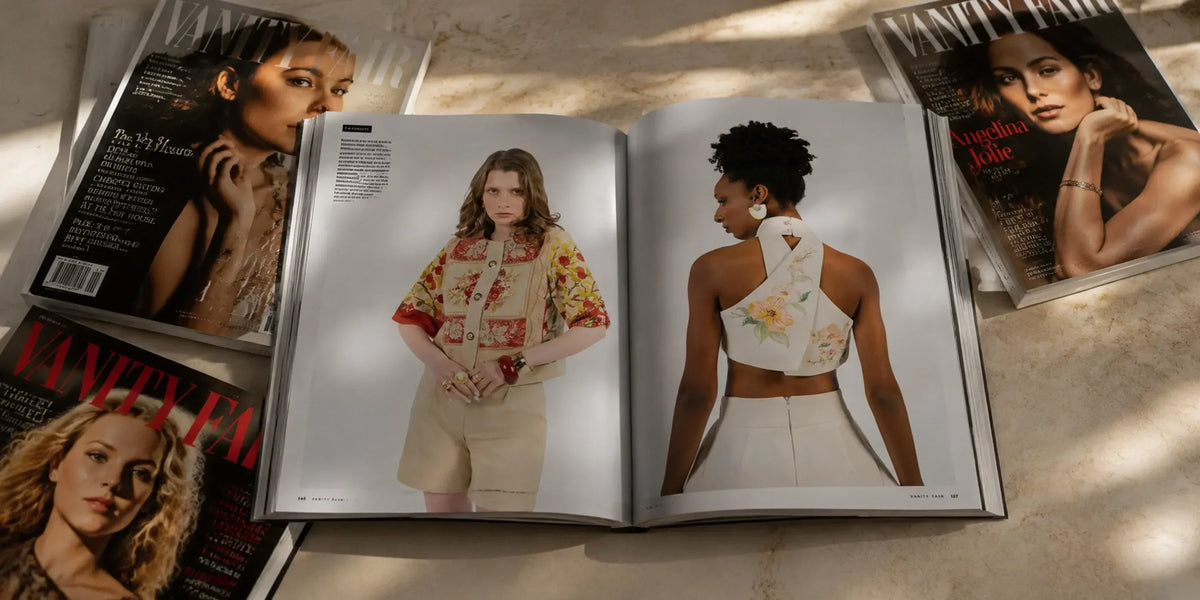
To open a page of Vanity Fair devoted to fashion is to take a step into the world of wearable art. The magazine rarely presents a collection as a mere sequence of releases; instead, it lingers on the imagination that conceived it, the philosophy that guided it, and the history it silently carries forward. A couture house is read the way a canvas is read: through its brushstrokes of colour, its restraint, its excess, its quiet rebellions against convention.
This narrative approach reshapes the reader’s relationship with the garment. A silk gown becomes compelling not for its label or its season, but for the vitality trembling beneath its surface, the pulse of life stitched into every seam. Vanity Fair writes as though each collection carries a heartbeat: the tension between tradition and reinvention, memory and desire, restraint and abandon. By framing fashion through this kind of atmosphere rather than through specification, the magazine invites its readers to encounter luxury the way one encounters a film or a poem, as something layered, felt, and lived, rather than simply seen.
In practice, this approach takes shape through long form profiles that trace a designer’s career across decades, retrospectives that place a single collection within the wider arc of a house’s history, and portrait sittings that document the creative process rather than merely its finished result. These formats give the magazine room to move beyond description and toward interpretation, treating each collection as evidence of a continuing artistic argument rather than an isolated seasonal statement.

The Weight of Editorial Recognition
To appear within the pages of Vanity Fair is to be received into a particular lineage of taste. It is not an announcement; it is a kind of consecration. The magazine’s editorial voice carries the authority of discernment built over decades, and when it turns its attention toward a house or a designer, it is offering something no advertisement could ever manufacture: the sense that this work belongs to a larger cultural memory, that it has been seen and judged worthy by eyes trained to recognise significance.
This recognition settles slowly into the identity of a house. It is felt in the way a name begins to carry association beyond its own collections, in the way it becomes entangled with ideas of heritage, artistry, and permanence. What Vanity Fair offers is not visibility in the ordinary sense, but a kind of cultural inheritance, the quiet assurance that a house’s work will be spoken of not only in the language of seasons, but in the language of legacy.
Fashion, Art, and Cultural Influence
Within Vanity Fair, fashion rarely stands alone. It is placed beside cinema, portraiture, and the wider currents of art, as though garments were simply another dialect of the same visual language. A gown photographed for its pages does not merely occupy the frame; it inhabits it, the way a figure inhabits a painting, caught mid gesture, mid breath, suspended between stillness and motion.
This is where art’s adornment upon the heart of fabric becomes visible. A silhouette borrowed from an old master’s portrait, a colour drawn from the glow of a film still, a posture echoing the theatre; these are the quiet inheritances that give fashion its depth. By placing designers among artists, actors, and cultural figures, the magazine dissolves the boundary between craft and fine art, allowing readers to sense that the tailor’s needle and the painter’s brush are, in their own ways, telling the same story of human expression.
This positioning carries practical weight for how a house is perceived beyond its own industry. When fashion is discussed alongside cinema and fine art rather than in isolation, it becomes associated with institutions the audience already regards as culturally significant, museums, film archives, retrospectives of painters and photographers. That association extends a measure of the credibility those institutions hold to the fashion house itself, allowing a collection to be read within a framework of artistic seriousness rather than commercial output alone.

How Editorial Narratives Shape Luxury Consumers’ Perception
There is a particular kind of intimacy that grows between a reader and a garment once its story has been told. A collector does not simply acquire an object; they inherit a fragment of a larger narrative, a private echo of everything they have read about its origins, its craftsmanship, its quiet defiance of time. This is the alchemy that editorial storytelling performs: it turns fabric into memory, and memory into longing.
Vanity Fair’s prose lingers in this space between object and meaning. A reader who has followed a house’s story for years no longer sees only a coat or a gown; they see the accumulation of everything written about it, the atelier’s discipline, the designer’s restless imagination, the cultural moment it once answered. In this way, storytelling becomes a kind of quiet seduction, not through persuasion, but through intimacy, through the slow unfolding of a narrative that makes the reader feel they already know the piece before they have ever touched it.
Conclusion
Luxury as a Cultural Legacy
What endures in fashion is rarely the garment itself. It is the story that clings to it long after the season has passed, the way perfume lingers in a room after someone has left it. Vanity Fair has spent decades composing these stories, not as commentary on an industry, but as a kind of literature written in silk, leather, and thread.
In treating fashion as art, as memory, as a form of quiet storytelling, the magazine has helped luxury houses become something more permanent than their collections: guardians of a cultural imagination that outlives any single season. And perhaps this is the truest measure of luxury, not how it is worn in a moment, but how deeply it comes to be remembered.